Laser projection and 2.35:1 screen
Laser projector alignment, throw distance, brightness, room light, seating distance, and a Slate 2.35:1 screen for a true wide-screen cinema presentation.
Home Theater Installation Houston
A theater should feel cinematic without becoming complicated. We plan projection, 2.35:1 screen geometry, speaker placement, Atmos layout, electronics, subwoofers, lighting, wiring, calibration, and control as one finished system.
Private theater planning
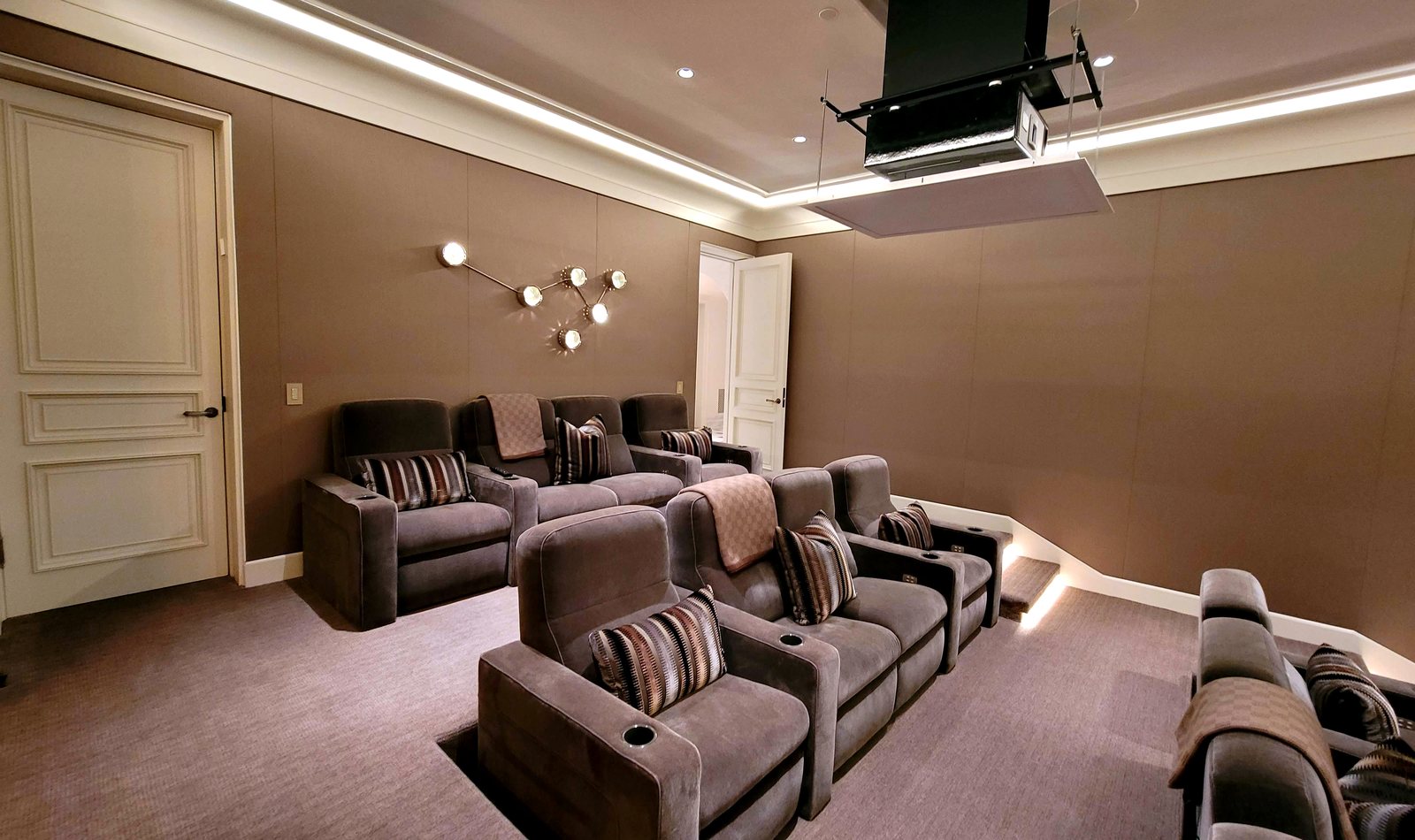
We plan screen geometry, seating distance, projector location, speaker layout, lighting, cable paths, rack location, control, calibration, and service access before recommending equipment.
The goal is a theater that looks finished, feels cinematic, and is simple to use whether you are watching a movie, streaming a game, or shutting the room down for the night.
Details
Laser projector alignment, throw distance, brightness, room light, seating distance, and a Slate 2.35:1 screen for a true wide-screen cinema presentation.
Full-range MartinLogan ESL towers with a MartinLogan center channel so the front soundstage matches the size and emotion of the screen.
A full Dolby 11.2 Atmos speaker plan with proper channel assignment, height placement, subwoofer integration, and calibration.
Arcam receiver processing with Parasound five-channel amplification for clean headroom, dynamics, and control over the front-stage speakers.
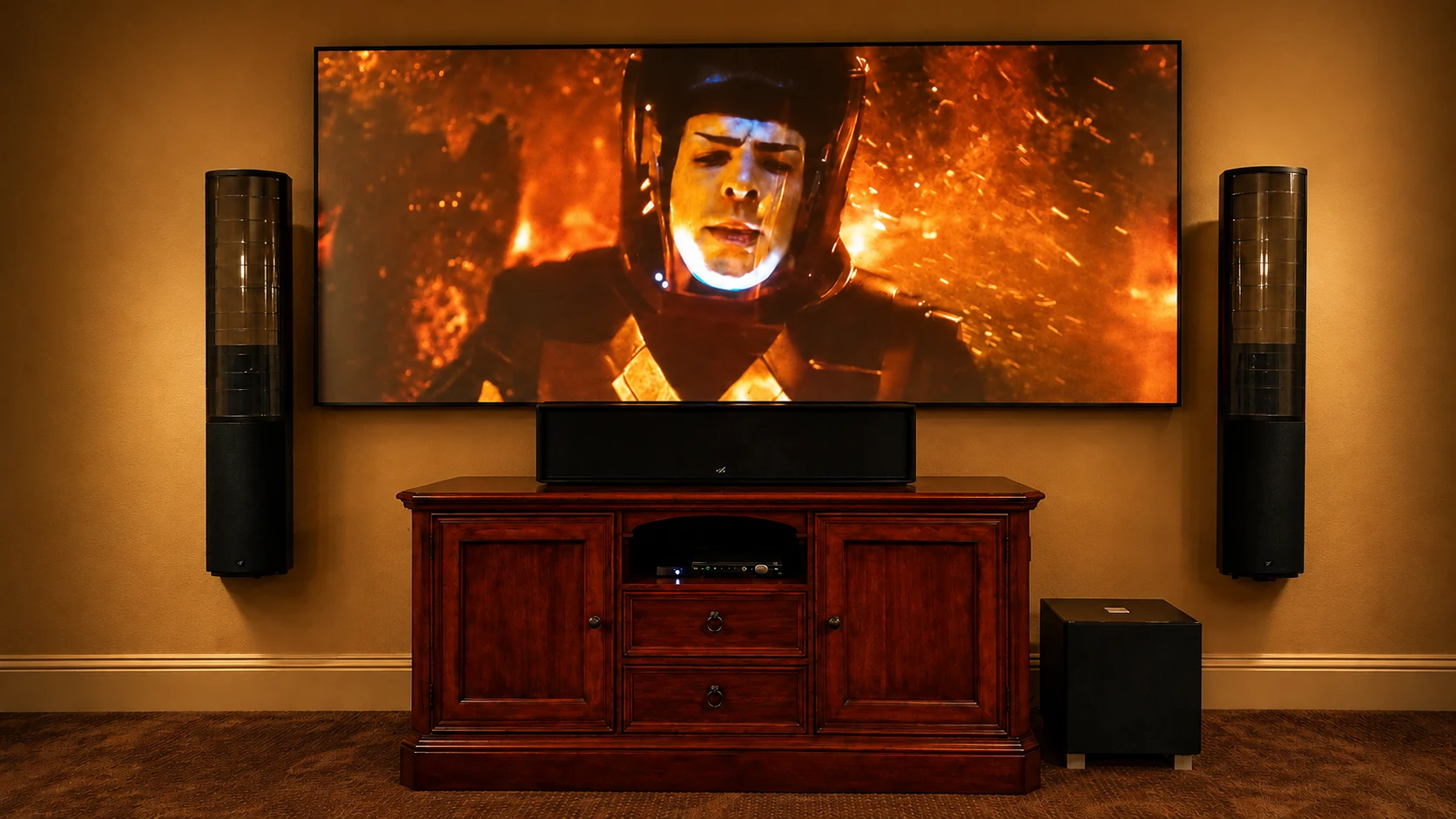
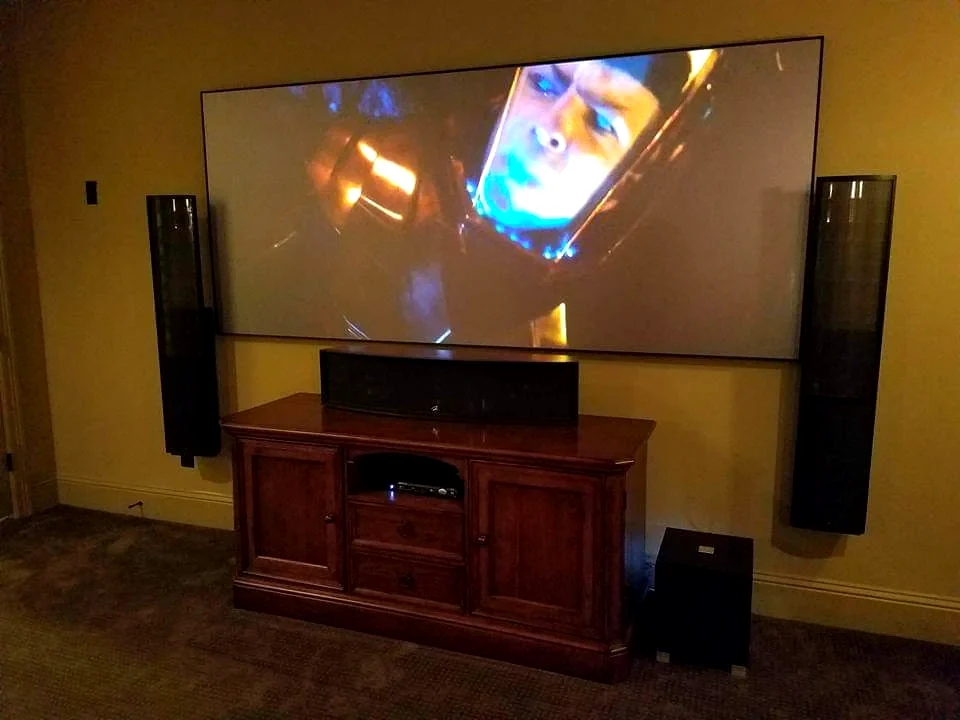
This theater uses laser projection on a Slate 2.35:1 screen, full-range MartinLogan ESL towers, a MartinLogan center channel, full Dolby 11.2 Atmos, an Arcam receiver, and Parasound five-channel amplification.
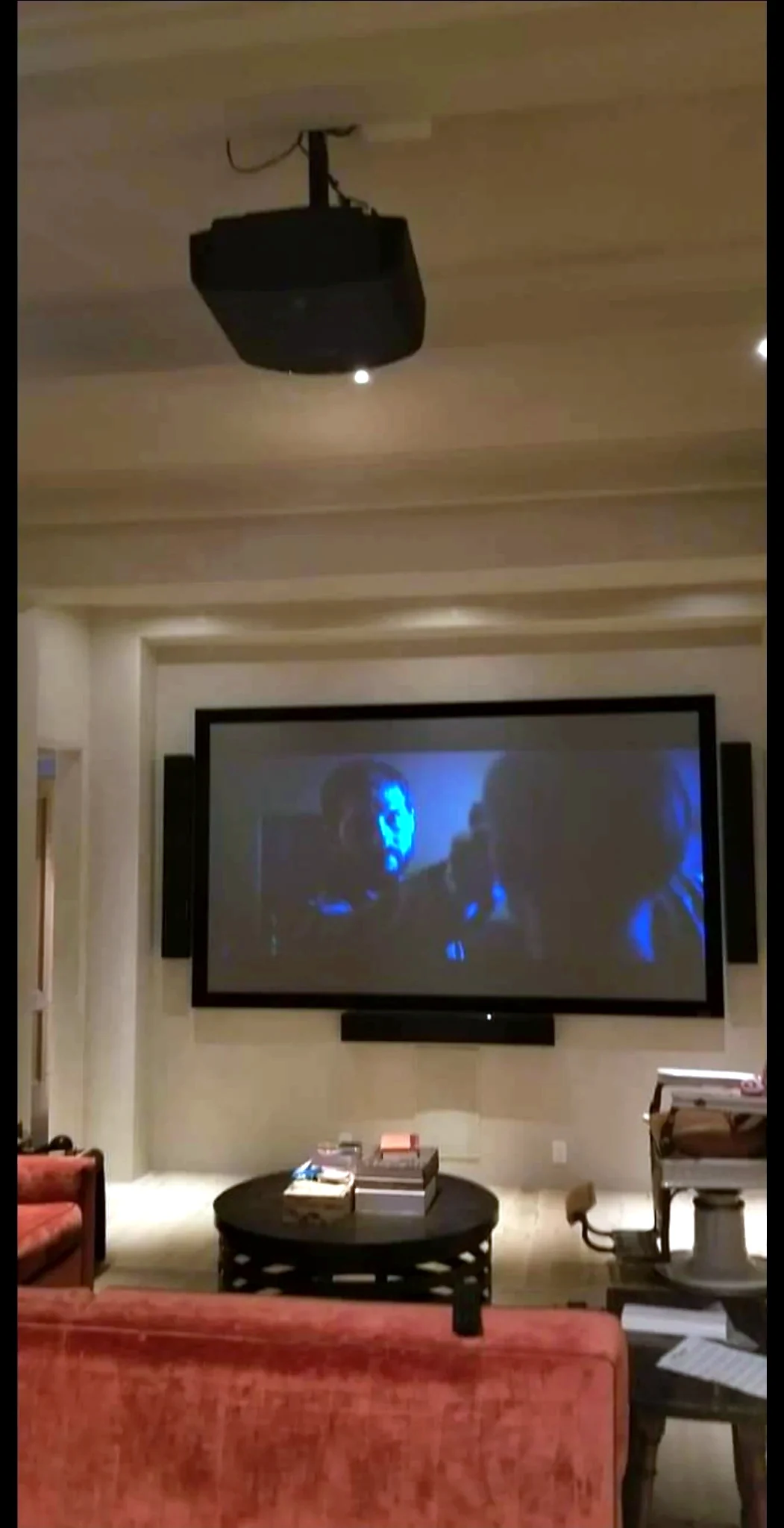
Call Obsidian AV
We look at the room, the rack, the network, the programming, and the client experience before recommending equipment changes.
Theater planning details
A wide Slate 2.35:1 screen changes the way projection, lens memory, seating distance, wall width, speaker placement, and source content need to be planned.
Full-range MartinLogan ESL towers and a MartinLogan center channel are not just impressive gear. They create the front soundstage that carries dialogue, music, and impact across the screen.
Dolby 11.2 Atmos only works when height channels, surrounds, subs, levels, distance, and bass management are planned and calibrated correctly.
Arcam processing and Parasound five-channel amplification give the theater the control and headroom needed for a system that feels effortless instead of strained.
How Obsidian AV works
We start with the room: seating, screen size, speaker placement, lighting, cable paths, rack location, network stability, and how the client actually uses the system. Equipment comes after the room tells us what it needs.
When something is broken, we do not start with parts roulette. We check power, network, processors, source routing, firmware, drivers, audio zones, cabling, control logic, and rack condition before recommending replacement.
The app, touch panel, remote, room names, scenes, and shortcuts should match the way the homeowner, office team, or facilities staff actually uses the space.
A good system should not trap the client. Labels, documentation, clean racks, stable networks, and a clear support path matter because luxury AV has to keep working after the install is complete.